Think

From 2012 to 2013 – No Badgers!

De Ja Vu. Another trip to the Rose Bowl and another loss by Wisconsin. That’s how 2013 started for me but you can’t win em all, right?

Wisconsin vs. Standford 2013 Rose Bowl.

Like all new years, I try to take some time to reflect on the past year. I think it’s a healthy and worthwhile thing to do (Here is last year’s review). It also helps to put things in perspective when thinking about the year ahead. So let’s see how this year went.

I mentioned it earlier but this January started off like last January. Wisconsin lost in the Rose Bowl. Shocking. Last year however I wasn’t in Los Angeles for the game. I think it was because I was looking forward to a much bigger game that would take place the next month.

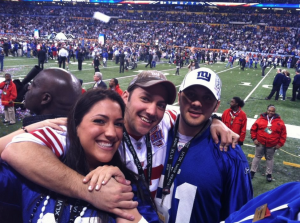
Giants win the 2012 SuperBowl!

(Indianapolis – Left to Right: My sister, brother, me.)

February. They did it! The Giants won the 2012 superbowl and it only took me 11 hours to drive across the country to Indianapolis with my father, brother and sister. The game and experience were both incredible. The icing on the cake was the fact that I took the Giant’s to win with 25 to 1 odds. That will probably be the luckiest bet I ever make, but I’ll take it. I also had the chance to meet a lot of great people, performers and athletes but perhaps the most interesting encounter was when I bumped into Flavor Flav at the McDonald’s airport for my 4am flight to California. Yes, he was wearing his giant clock even at 4am. He was also on my flight.

Life is a series of ups and downs and March was one of the tougher months of the year. A family member of mine passed away from congestive heart failure. I’m not sure what else to say about that month other than it sucked.

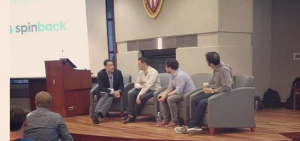
April was better. In just one month I would be getting married. Even typing the word “married” is still a bit strange but I wouldn’t change it. Aside from the wedding plans, I got to head back to Madison, Wisconsin with Andrew and Corey to talk to some students about our Spinback experience. As one friend put it, “the student becomes the teacher.” I don’t think I would go that far but it was great to share some stories with students.

Visit to UW B-School

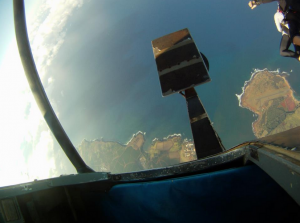
May is when I married my best friend, Amy. The wedding was incredible and I still need to watch the wedding video. I’ll be sure to do that in 2013. After the wedding we did the honeymoon thing and traveled across the country and to the Pacific: Hawaii. It was my first time there and I’m sure I’ll go back at some point. It was also a major milestone in my life as I finally got to cross sky diving off the bucket list. I expected to be terrified jumping out of the plane but it was one of the more peaceful and exhilarating experiences of my life. It’s something I highly recommend that you try. I also got to play golf at some spectacular courses which only reconfirmed how much work my golf game needs.

Amy is already out of the plane

(Amy is already out of the plane)

In June, Buddy Media got acquired by Salesforce.com. It was such an incredible experience to work with Mike and Kass Lazerow as well as the rest of the Buddy Media team. It’s amazing how much you can learn in such a short period of time. The deal was finalized in August and then I took some time off to do some traveling. Amy and I went to Greece, Turkey and Israel, ate some amazing food and did some extraordinary site seeing. If there is one thing I took away from that trip it’s this: Travel more. Life is short and the world is small. I’m pretty sure Australia is next on my list but who knows when I’ll make it there. And now I’m thinking about this quote I recently read.

The World is a book, and those who do not travel read only a page.  ~St. Augustine

Truth.

Istanbul, Turkey(Istanbul, Turkey)

Overall, 2012 was a phenomenal year. I learned to be more fearless, more independent and more appreciative of the important things and people in my life. In 2013 I’ll write some new chapters and blog posts. I’ll start a new business venture and keep moving on in this little thing called life.

Here are some random and meaningless predictions for 2013:

  • – Green Bay Packers will win the super bowl
  • – Zero Dark Thirty will win an award for best picture
  • – Iran will get a serious wake up call to stop development of nuclear weapons
  • – The internet will be less about people communicating and more about things communicating
  • – There will be another major stock market crash
  • – The health care industry will finally undergo disruptive transformation
  • – All of my predictions will be wrong
  • – I’m going to remind myself to never make any predictions ever again


From 2012 to 2013 – No Badgers! Read More »

Startup CEO: Ian Monroe on Social Entrepreneurship, Startup Chile, and Building a Tech Team

This post originally appeared on Forbes.com.

Ian Monroe is a lecturer at Stanford University, as well as the founding CEO of Oroeco, a company that’s gamifying personal sustainability (and seeking to incentivize the global economy in the process). It’s a big mission and I was intrigued by what his company is working on so I caught up with Ian to hear more about Oroeco’s trials and tribulations, as well as his relocation to Santiago for Start-Up Chile.

Dan Reich: When and why did you decide to become a social entrepreneur?

Ian Monroe: Well, I suppose my path to social entrepreneurship was part inspiration, part imitation, and part process of elimination.

I’ve spent most of the last decade bouncing around the world while working on projects related to energy, sustainability, and international development. I enjoyed working with non-profits and corporate clients, but I didn’t see many lasting impacts come out of my field research and report writing. I also enjoyed collaborating with academics and government, but the lack of information transfer from research to policy-making and public awareness got similarly frustrating.

As these frustrations were building up, I saw many of my friends start companies I’m convinced are going to change the world, like Lukas Biewald (CrowdFlower), the late Corwin Hardham (Makani Power), and Brent Schulkin (Carrotmob). Being surrounded by entrepreneurship mentors – where I live in San Francisco’s Mission district there are literally dozens in every direction – made the process of founding a startup seem less daunting and more doable. All I needed at that point was an idea worth dedicating a substantial chunk of my life to build into a business.

DR: How did Oroeco become the idea you decided to build into a business?

IM: Oroeco was born out of seeing both need and opportunity. Fundamentally, Oroeco is something I’ve wanted for my own life for a long time. Despite being a supposed “expert” in sustainability – to the point that I’m invited to teach courses at Stanford on the topic, speak at conferences, and contribute to industry certification efforts – I still can’t walk into Walmart or a grocery store and easily quantify which options are best for other people and the planet. And the choices I know make a difference – like driving less and eating less red meat – are often offset by my international flights.

What I’ve been missing is a tool that easily tracks all my choices, shows me how they compare based on the metrics I care about, and suggests and encourages improvements. Ideally this tool would be fun and social too, since it’s easy to get overwhelmed by data, while comparisons to friends are a lot more engaging.

I also found myself increasingly thinking an Oroeco-like service was needed to realign our economy for sustainability. Most large-scale social and environmental issues – like climate change – trace back to companies producing goods and services that ultimately get paid for by consumers. So informed consumption can drive supply chains to become more sustainable, but first we all need the information and incentives to make better choices.

The idea for Oroeco didn’t refine into a social business concept until I saw that technologies already existed to make it happen. First my environmental life cycle assessment research with Stanford and NRDC exposed me to a bunch of great data sets, which quantify sustainability impacts for most products and services. Then I saw technologies like Mint.com make it easy to automatically track all my spending and investment in one place. And the last piece was seeing the opportunity to connect both of these data feeds to the growing ubiquity of Facebook and social gaming.

DR: What are the biggest challenges Oroeco has faced so far?

IM: The biggest initial challenge was building a great tech team. It’s funny, because I considered myself to be more of a “techie” than most with my science and engineering background, but unless you’ve got “computer” or “software” in front of your degree you don’t count as “technical” in the Silicon Valley.

Finding a team of solid technical co-founders took nearly a year. The process was made more difficult by the fact that Oroeco was entirely bootstrapping, so I was essentially only offering equity and enthusiasm for how Oroeco could change the world. On the positive side, we’ve now got a fantastic team that’s both highly qualified – most are startup vets from Stanford, MIT and UC Berkeley – and as passionate about personal sustainability and Oroeco as I am. I’m particularly excited that our primary engineering leads are two awesome women (Yang Ruan and Kirstin Cummings), which is a rarity in the startup world, and something that’s helping us incorporate gender-balanced perspective into design decisions.

DR: Chile is a long way to go for a startup accelerator, what convinced you to leave San Francisco for Santiago?

IM: We considered a few American startup accelerators, but by offering about $43,000 in equity-free investment, Start-Up Chile was by far the best deal we could find, as well as a great opportunity to connect with a network of international entrepreneurs who can eventually help Oroeco go global.

I’m the only Oroeco team member who’s spending a full six months in Santiago, while the rest of our team will keep circulating between the San Francisco area, Boston, and New York. While I’ve had the opportunity to work in much of the rest of Latin America on various sustainability projects, this is my first time in Chile.

On the more personal side, I’m fascinated by Start-Up Chile’s model, and getting a firsthand look at its successes and failures. The program is already being emulated by other countries, like Brazil. Start-Up Chile clones could catalyze entrepreneurship throughout the developing world, and the program is already sparking a tremendous amount of international networking and knowledge exchange.

DR: How has the Start-Up Chile experience compared to building a business in Silicon Valley? Has Chile succeeded in creating a startup-friendly environment?

IM: Overall, Start-Up Chile has been fantastic. The support staff and working environment are great. Santiago is an easy city to navigate, with public transportation on par with San Francisco and many European cities.

Navigating the Chilean bureaucracy has been a bit more challenging. Start-Up Chile has tried to streamline the process as much as possible, but there are still a lot of paperwork hoops to jump through. It took me nearly a month and more than a dozen signatures to open a bank account through a local Citi branch, then another half dozen documents to sign off on just to put cash into my account. In contrast, setting up a Citi account in San Francisco took about 15 minutes, and I’ve opened an account in Beijing in about as much time, despite my Mandarin being much worse than my Spanish!

DR: Oroeco’s mission is to fundamentally shift the global economy towards sustainability. But that task seems quite daunting, particularly for a little startup. What are your biggest challenges ahead?

IM: Our current challenge is to spread the word that we exist. Our big push now is to recruit our first beta users through our Indiegogo campaign – indiegogo.com/oroeco – which wraps up January 1st. So if people hear about us, like what we’re doing, and want to try us out, that’s the place to go. We’ve got a next to nil marketing budget, so we’re relying heavily on social marketing and word of mouth.

Over the longer term, the challenge is to simultaneously grow our user base while keeping our existing users engaged. There’s plenty of market research that shows most people want to live more sustainable lifestyles, and Oroeco can be a disruptive technology that changes how people and companies incorporate sustainability into decision-making. But for that to happen we need to scale to millions of users, ideally hundreds of millions, and these users need to be engaged enough by Oroeco’s user experience that our information and incentives factor into their everyday choices.

Our success will ultimately hinge on our user experience, since a compelling product will market itself. We think we’ll appeal to more users as we add societal, health and environmental impacts indicators beyond climate change, and we should appeal to even more users as we refine our social gaming and rewards. The challenge is to add functionality without compromising on design elegance, and to provide a flexible interface that can accommodate a wide range of user preferences.

A final challenge is protecting user privacy, particularly since we’re working with financial transaction data that can be sensitive. It’s important users trust us with their information, and have faith that we won’t create a great service that changes the rules of the privacy game once it hits critical mass. Users understandably get quite upset when this happens, which we’ve seen most recently with Instagram.

DR: Any parting advice for aspiring social entrepreneurs?

IM: It’s cliché to say, but the most important thing is to be thoroughly passionate about what you’re working on. And don’t be afraid to share that passion with everyone you know. Your honest enthusiasm is what will attract like-minded team members, as well as investors and users. It’s also ultimately what will make the bouncy startup journey fun and rewarding, even if you end up in a ditch.

I’m naturally a pretty laidback guy, with a tendency to engage in long-winded academic discourse, so infectiously exuding my excitement for Oroeco is a challenge. But I’m still happily working long nights and waking up excited, which is only the case because I still thoroughly believe we’re building something that will help craft a sustainable future. Sharing this passion with a great team and crew of awesome advisors has only magnified this feeling. Now we just need to demonstrate there are a lot of users out there who feel the same way.

Dan Reich is a tech entrepreneur and engineer. He has founded and sold multiple companies, the most recent of which was acquired by Buddy Media, which in turn was acquired by Salesforce. Follow him on Twitter at @DanReich.

Startup CEO: Ian Monroe on Social Entrepreneurship, Startup Chile, and Building a Tech Team Read More »

How To Prepare for Disasters. Emergency Healthcare and Rescue Tips.

I just finished up my National Ski Patrol refresher over the weekend. This is the 12th year I’ll be volunteering as a patroller at Mount Snow Vermont. For those of you that don’t know what ski patrol is or what we do, you can think of it as an EMT on skis or in my case a snowboard that is primarily responsible for the immediate response, rescue, stabilization, and transport of a patient off of the mountain and to a primary care resource such as a doctor or hospital.

Hurricane Sandy has made everyone aware of the importance of good preparedness and immediate rescue in emergency situations. With that in mind, I wanted to share a few tips that you could use in times of an emergency.

Hands-Only CPR. In times of an emergency or a disaster, it is likely that people around you may go into shock. This could happen for a number of reasons but the result is that a person may experience low blood pressure, a rapid heartbeat, or poor diffusion which means organ’s aren’t getting the appropriate blood and oxygen levels. These issues can lead to death. One serious cause of shock might be due to hypothermia. With many people still out of heat, coupled with another storm coming, it’s entirely possible that you come across someone in need of CPR.

We watched this video (below) at our refresher and it is a great lesson on hands-only CPR. You can do this without being certified in emergency healthcare and it could make all the difference in a life or death situation. As for the video itself, please disregard the emergency number in the video as this was created for the British Heart Association.


Have a Plan: In Ski Patrol, we train and plan for a variety of scenarios that are both likely and unlikely to occur. The likely scenarios are things like broken legs or head injuries. The unlikely scenarios are things like an entire chairlift collapsing. In either case, we have a plan and set of tools we can use to handle any situation.

In times of an emergency, it is important to stay organized and have a plan. Hurricane Sandy caught everyone off guard and many were ill-prepared. In 2001 my family was also caught off guard when an F2 tornado hit our house in New Jersey.

Just like the fire-escape route in your office building, your family should have a defined plan of action in the event of an emergency.

Have the Tools: I think we all now understand the importance of preparation so some things to consider include: food and water supplies, clothing for extreme weather conditions, medical supplies like bandages and medicine, tools like knives and shovels, and gas and fuel.

Below is an actual list of items that a Sandy victim is in need of. Might you need these things too in case of another emergency?

  • – work gloves to pick up your sewage soaked stuff
  • – black garbage bags to put them in….
  • – swiss army/leatherman type multi tools
  • – hand sanitizer
  • – plastic grocery bags for use over spackle bucket as toilet. baby wipes and diapers also
  • – paper towels / toilet paper/ zip lock bags all sizes
  • – plastic tarps to lay your good stuff on so it stays off of the wet porch and street while you pack it in your car…
  • – rope to tie down your roof and your hatch back so you can fit more stuff per trip.
  • – rubber boots for cleanup volunteers and the older people wandering the street in their slippers because they will not leave their homes….
  • – propane as people are using their gas grills to keep warm…
  • – flashlights/batteries/head lamps
  • – metal water/paint buckets to boil water on the grill to make cup of soup/canned ready to eat meals (think chef boyardee) especially with pull tops!/tea/hot cocoa/instant coffee also flip top canned fruit!
  • – certified red plastic gas cans… as people are bringing poland spring jugs to the gas station and being turned away .. 2- 1/2 gallon or smaller…. we would love 5 gallon ones too but they are very heavy to carry when full especially if you have to walk a great distance…….. trust me I know!
  • – our “pipe dreams” are for generators and hand trucks but we will work on the small stuff for now…
  • – I know there are more items but these are what WE needed when we were there… clothing and food being brought by local scout troops etc but the above things the stores down there are out of!

So there you have it. Having a basic understanding of life saving skills like CPR, having a plan, and having the right tools can make all the difference in another disastrous situation.

How To Prepare for Disasters. Emergency Healthcare and Rescue Tips. Read More »

The Pain In My Throat

There were at least 30 of them just standing there, listening to the tour guide talk about the room they were about to walk into.

Some of them looked between 60 and 70. Some of them looked much older. All of them however were speaking very heavy German. I’ve been to Germany before but this was a sort of different German. It was the type of old, rustic, 2 generations ago German that I’ve only heard a few times in my life. One time when my grandparents said a few words in the language and another time when I was visiting Frankfurt Germany for the 2006 world cup.

This group was about to walk into the room that I had just left. A room that left me with a sharp pain in my throat and no matter how many times I would go back into this room, I knew that sharp pain would always come back.

Auschwitz. Dachau. Treblinka. Birkenau. Bergen Belsen.

These were some of the names of the death camps that Nazi Germany built and used to kill over 6 million Jews, many of which were my relatives.

(I don’t know if the picture above are actual relatives of mine, but with the same last name they must have been related to me at some point in time, right?)

The names of these camps were also engraved on the floor of this remembrance hall. It was a special room of Yad Vashem, the Holocaust Museum in Jerusalem, Israel.

As I walk out of this remembrance hall, I can hear the elderly group very softly asking the tour guide questions in German. It was refreshing to see a group like this visiting the museum in hopes of learning more about those horrible years. Inquisitively asking questions. Looking upon their tour guide and consuming every word as if they wanted to imagine what it would be like to actually be there.

..actually be there..

They were probably about the same age as my grandparents both of which are holocaust survivors.

And that’s when I stopped to turn around.

Then my brain started to fire off questions..

Were they Nazi soldiers?
Did they help the Nazis?
Were they civilians?
What did the see?
What did they hear?
What did they do?
What didn’t they do?

These questions kept bouncing around in my mind. I walked away and concluded that they were probably just innocent bystanders of the war having little or no involvement.

And that is precisely the moment when I felt the worst.

How is anyone innocent when they silently stand by while pure evil or injustice is happening around them? How is anyone innocent when people are packed in to cattle cars only to be shipped off to death camps?

And that brings me to today.

Our world is fucked up. Although we think the world is a better place, which it is, there is still a lot of hate and injustice floating among us. Bullying, antisemitism, racial stereotyping. Even at a lesser degree we see injustice happening in places like work, school, and politics.

And yet many of us including myself sit by and do nothing.

Today we have Facebook, Twitter, blogs (like this one), and it is extremely easy, physically speaking, to take a position and speak out against something you disagree with even if it is only 140 characters long. This is happening all over the world today. It is the cause of new revolutions and uprisings from places like the middle east to places like China. This past week alone we saw a 14 year old girl stand up to Al Queda using her blog.

During the Holocaust there wasn’t an easy way to share information and stand up for something at a large scale. There were many German civilians, and even Jews, that stood by and did nothing.

Seventy years later there are German citizens who are donating their entire estates to Israel due to the guilt that went along with their actions or inactions. Seventy years later I witnessed firsthand the guilt that went along with those actions or inactions.

If we see injustice happening we should use the means around us to take a stand.

Standing up for something today is much better than standing over a memorial tomorrow.

The Pain In My Throat Read More »

Five Questions to Ask Before Joining that Start-up

This post originally appeared on Harvard Business Review.

Mark Zuckerberg reinvigorated an entire generation when he added nine zeroes to the end of his bank account before he was 30 years old. He made start-ups great again. He showed the world that youth is not a preventative factor of success and that work can actually be fun. This theme of wealth creation while doing something you love is why an increasingly large percentage of graduates are turning to start-ups over more traditional jobs. It might also be why people are quitting their consulting gigs and investment banking positions to pursue a career in start-up land. Just yesterday I ran into a recent Harvard Business School graduate who quit her consulting gig in order to follow her dream at a new start-up.

Unlike big, established corporations or what we might classify as a “steady job,” start-ups present more inherent risk because there are more variables and questions for a prospect to consider. Things like: Does this start-up have the right team? Do they have money? What if I choose the wrong company? Nevertheless, this risk is often overlooked because start-up employee prospects realize that new ventures are more fun, are intellectually rewarding, and could have big paydays down the line.

But there are practical questions that all start-up prospects should consider when looking to join the next could-be big thing.

How many outstanding shares exist? Joining a start-up can have significant upside if you own equity in the business. That upside is determined by two things: the percentage of the company you own and the valuation or price of the company upon a liquidation event (e.g., the sale of the company). When you join a start-up you are often issued stock options. Maybe you are issued 1,000 options; maybe you are issued one million. This number is only as important as the number of outstanding shares in the company. If you are issued 1,000 options and there are 10,000 outstanding shares, then you may own 10% of the business. Make sure you ask your prospective start-up employer how many outstanding shares there are, so you can understand what part of the company you own. If they don’t want to tell you, then you may want to reconsider the job altogether. If they can’t tell you this, what else might they be hiding?

What is your stock option vesting schedule? Time flies in start-up land. When you get an offer from a start-up, make sure you understand how long it will take to actually receive the equity you are entitled to. A typical vesting schedule has a one-year cliff with a subsequent three-year earn out that vests each and every month. So if you think you might leave within four years, make sure you are comfortable with the vesting schedule. Four years is a long time in a start-up.

How restrictive is your noncompete or non-solicit agreement? I once read a noncompetition agreement that said anything I worked on — in- or outside of the office, during working hours and non working hours — was owned by the employer so long as I was employed there. This is a very restrictive agreement and in so many words says you are a slave to the company. Make sure you understand what this part of your contract says. Employees in the start-up world often bounce to and from various companies, so you want to make sure you’re not putting yourself in a compromising situation down the road.

Does the team have a track record? Winners know how to win. It’s why venture capitalists tend to favor entrepreneurs that have a proven track record (PDF). A VC once told me that he “looks to invest in people with an unfair advantage over their competitors.” These entrepreneurs are people who know the ins and outs of a successful path in a specific domain. Before joining a start-up company, make sure you have a very strong understanding of the team, their investors, and their advisers. This will give you a great indication as to whether or not the start-up has the right ingredients for success. If the team members don’t have a track record, that’s alright, but make sure you understand what it is that will put them on a winning path.

Why am I really doing this? The most important thing you need to ask yourself when joining a start-up is why. Some people do it because they hate their jobs. Some people do it because they want the credentials. Others join because they think they will get rich or it’s the cool thing to do. Ultimately, when you are looking to join a start-up you need to understand the real motivational factors behind your search, because if your reasons do not align with the opportunity, it is likely you will be neither happy nor successful.

With advancements like cloud-based hosting, labor marketplaces, online education, and video conferencing, it is now cheaper than ever to start a company. As a result, we will see continued growth from emerging start-ups and their respective employment opportunities. If you are debating whether or not to join an early-stage venture, make sure you are asking the right questions in order to mitigate your risk and maximize your chances of success.

Five Questions to Ask Before Joining that Start-up Read More »

America’s Top Colleges List is Broken

This post originally appeared on Forbes.com.

Let me guess. You looked at the recent Top Colleges List published by Michael Noer and suspiciously thought, “this doesn’t seem right.” I know that’s what went through my mind when I first looked at the list and found that my school, the University of Wisconsin – Madison, was number 147 on the list.

Since the list was published, I’ve had over 50 different conversations with people to ask them what they thought about the rankings. Overwhelming, the response was something along the lines of “the list is broken.” That was my feeling too.

As someone with a background in math and engineering, I can say that building out a model like this is not an easy task and I applaud Michael and his team for procuring such a comprehensive and transparent list. However, after reviewing the methodology behind these rankings, it seems to me like we should be measuring the schools on different factors.

If we want to look at “things that matter the most to students,” here are some components we should consider in next year’s list:

College Brand Equity. If you had to do college over again, how many of you would apply to Penn State? Or what would you do if you could attend Harvard? Like everything in life, perception is reality. Associations, prestige, and brand names all matter. For better or worse, people are persuaded by these accolades and if they will help advance your career in the real world, then they should also help advance the rankings of a particular school in this list.

Strength of Alumni Network. I once had a 3 hour meeting where I was pitching a client for new business.  By the end of the meeting I was only 50% certain that I would win the business, until I said, “I’m going to Madison this weekend for a visit.” That one remark sparked another 30 minute conversation because the prospective client also went to Wisconsin for school. That week I won the business and the deal was closed. Connections matter in business and in life. They should also matter in this list.

Number of CEOs or Executives at Companies. How many of you have read the biography of Steve Jobs, Thomas Edison, Warren Buffet, Mark Cuban, Richard Branson or other great business leaders? You’ve probably done this because you want to know what it takes to be successful. There are other great business leaders and captains of industry that are lesser known. These are CEOs and Executives at Fortune 500 companies and promising start ups. If some colleges produce more leaders than others, it’s probably a good indication that other great leaders will emerge from those schools and therefore, this metric should be part of the ranking methodology.

Number of Students Participating in Entrepreneurship Centers. To succeed in today’s global economy you must be innovative, adaptive and independent. Entrepreneurs understand this better than anyone, but the schools that understand this are the ones encouraging and operating those entrepreneurship centers. These schools are the ones that accept and embrace change and they are also the ones that will most likely survive the looming academic bubble.

Student Load Default Rates. Although this is included in the methodology, this component should be weighted much higher than 5%. The concept of school is simple. You go to school to learn and then you use that education to get a job and earn a living. If your student loans exceed your earnings then by definition, your career is less valuable than what you paid for it. Easy math. Easy metric. It should be weighted higher.

What other metrics do you think are missing from the list?

Connect with Dan Reich on Twitter – @danreich.

America’s Top Colleges List is Broken Read More »

Making My Site Mobile Friendly and Responsive

Image representing iPad as depicted in CrunchBase
Image via CrunchBase

I’m in the process of redesigning this site so that it works more seamlessly with mobile devices. In a few short years, I think we’ll see that all web applications will be natively designed for a mobile experience. I think we’ll see that the way we interact with our phones and iPads will be the same way we interact with our desktop computers or laptops. The screens and inputs will be different but the experience will be the same.

Therefore, I needed to make my site mobile friendly and as always I figured I’d learn a thing or two along the way.

To do this, I downloaded a new responsive wordpress theme from themeforest.net called “Reaction WP: Responsive, Rugged, Bold.” You can get it here. I used the admin interface and firebug to make some styling adjustments and also had to make some hard code changes to the php files.

I’m not completely satisfied with the final product but that’s part of the learning process. It will get better as I figure out how to use some of the newer solutions out there. For now, at least the site can work a little better with my phone and with yours.

Making My Site Mobile Friendly and Responsive Read More »

Mobile Healthcare for the Consumer

The device includes a stethoscope cut in half and microphones. Researchers say it measures blood pressure with 95 to 98 percent accuracy.

I’ve been thinking a lot lately about the convergence of mobile devices and consumer healthcare. I believe there are three changes happening that are creating a perfect storm for a new wave of mobile medical devices.

1. Standardized Mobile Operating Systems (OS)
Before android or iOS came along, engineers that wanted to build a mobile medical device had to develop the software and the hardware. There were no standard, mobile operating systems in place that made software development scalable for medical devices. Sure there was MS Windows, Linux and other OS in existence, but none of these worked really well for small, mobile hardware. Engineers were required to use Programable Micro Controllers (PICs) and related devices. With the advent of android and iOS, it is now possible to write software without having to worry about the underlying supporting architecture and hardware.

2. Wireless Connectivity
The healthcare industry is inundated with expenses and impossible budgets. This is largely due to high volumes of patient visits and patient readmissions. Many of these visits are for simple physician checkups in order to conduct things like blood pressure measurement or EKG measurement. The information obtained from these frequent tasks are required to make the physician smarter about the patient so that they can implement the right treatment. The combinations of measurement devices and smartphones would allow these simple tasks to be done in the home and relayed back to the physician wirelessly.

3. Consumer Adoption
According to Gartner, total smart phone sales in 2011 reached 472 million units and accounted for 31 percent of all mobile devices sales, up 58 percent from 2010.” It’s no secret that people everywhere are using smart phone devices. If they aren’t, they will be very soon as it’s only a matter of time. Since consumers already have possession of these mobile devices, they are already in a position to buy a third-party accessory. Just like you might buy an iPhone case or a portable speaker, owners of smart phones could just as easily buy blood pressure measurement units or other medical plug-ins. Furthermore, the costs of a mobile medical device would be significantly lower because the consumer already effectively paid for half of the device – the phone.

So I think this market will emerge, but I’m not sure how long it will take. To understand that, there are two big question marks in my mind that need to addressed. The first is whether or not consumers care enough about their health in order to make them proactively engaged with one of these devices. I do think this could be overcome with things like game mechanics. The second is whether or not there will be a favorable environment with regards to governmental regulations, although I do think we are heading in the right direction. The HITECH Act, part of the 2009 stimulus bill, states that doctors are eligible for $44,000 in subsidies if they deploy “meaningful use” of electronic health records (EHRs) – keyword there being “electronic.” So it’s clear that we are moving in the right direction. It’s just a matter of how long it will take before we get there. I don’t know when our phones will be our personal doctors, but I do know it will happen.

Mobile Healthcare for the Consumer Read More »

Motivational Hip-Hop Quotes

Cover of "The Lost Tapes"
Cover of The Lost Tapes

I grew up listening to Hip-Hop and still love it to this day. The beat, the tempos, the lyrics – those are the things that make Hip-Hop great. But there are many songs that stick out above the others. There are those songs that always make me turn up the volume and compel me hit pause at certain parts, so I can rewind, and listen to a specific string of lyrics. Sometimes I do this over and over again. These are lyrics that have stayed with me and they are words I think about in business, in relationships, and in life.

These are just a few:

  • “Turnin’ nothin’ into somethin’ is God work, and you get nothin’ without struggle and hard work” – Nas, Doo Rags – The Lost Tapes
  • “I never ask for nothin’ I don’t demand of myself. Honesty, loyalty, friends and then wealth” – Jay Z, Justify My Thug – Black Album
  • “Now I’m on the rise, doin’ business with my guys. Visions realize, music [your craft] affected lives. A gift from the skies, to be recognized, I’m keeping my eye on the people, that’s the prize” – Common, The People – Finding Forever
  • “Speak what I want, I don’t care what y’all feel. ‘Cause I’m my own master, my Pop told me be your own boss. Keep integrity at every cost,” – Nas, Bridging the Gap – Street’s Disciple Disk 2
  • “Every interview I’m representing you making you proud. Reach for the stars so if you fall you land on a cloud.” – Kanye West, Homecoming – Graduation
  • “Far from a Harvard student, just had the balls to do it” – Jay-Z, What More Can I Say – The Black Album
  • “Whats up with your motto? Will you lead? Will you follow?” – Nas, My Generation – Distant Relatives
  • “The victory’s found in truth, like innocence found in youth Self defeat is your own dispute ” – Damian Marley, Strong Will Continue – Distant Relatives
  • “Sometimes you gotta be an s.o.b., you wanna make a dream reality” – Mark Knopfler, Boom Like That – Shangri-La (not Hip Hop)

What others should I have on this list?

Enhanced by Zemanta

Motivational Hip-Hop Quotes Read More »

Scroll to Top