Starting a business is very hard. In a matter of 24 hours your emotions can range from thinking that your business will be the next Google, to thinking how moronic you were for even contemplating the idea in the first place.
In order to start a successful business, I believe you need two components above all else.
1. A Team
Collective knowledge is more powerful than any one individual. But I believe Eric Schmidt puts it best:
“How should you behave? Well, do things in a group. Don’t do things by yourself. Groups are stronger, groups are faster. None of us is as smart as all of us…..” – Eric Schmidt, CEO Google.
2. The Entrepreneurial Snowball Effect
Beyond having a team, you need a group of people that can feed off of each other. People that together, build continual momentum regardless of the challenges by feeding motivation to and from others in the group. If one person starts some momentum, others can build and build upon it until slowly, that once “idea” begins to grow into reality.
From my experiences, most people have great ideas but fail to see the execution through all the way. And the few that do see execution through quickly stop at the sight of any real obstacles (I’ve been guilty of both in the past).
If your lucky enough to find the right team with an entrepreneurial snowball effect, take your idea and just build something.
Lately, I’ve been having writer’s block. When I first started writing this blog I intended to update it once a day. Once a day quickly became once every two days, which quickly became a few times a week (if I’m lucky).
And the more I think about it, the more obvious it is to me why we all sometimes have “writers block”, or lack of creativity, ingenuity, or good ideas.
The more we try to plan or over think things, the more complicated they become.
My best ideas have come at the weirdest times, great opportunities came unexpectedly, and some of my most insightful and eye opening conversations happened with strangers. Completely unexpected and out of the blue.
This idea, or notion of “out of the blue”, not only applies to good ideas, but to life and opportunity.
If we plan less, work hard, and keep and open mind, the complicated becomes simple, and those good ideas come out of no where.
How can you really expect to be successful if you sit back and simply do what is expected?
I’ve heard on numerous occasions about how getting a certain job, whether enjoyably or not enjoyable, will accelerate chances of success.
People strive so hard to do their best, to get that great job, and yet when they get that job, they can’t help but think how miserable it is.
If we are truly to be successful at anything, we can’t simply go through the motions. We must love what we do. If we are counting down the clock till 5pm, what is the point?
At the end of the day, success comes from hard work and a desire to do well. If we don’t like what we do we will simply do less, strive for less, and just go through the motions.
Data is King. If you don’t believe me, consider this:
Rental car companies and insurers are refusing service to people with poor credit scores because data mining tells them that credit scores correlate with a higher likelihood of having an accident.
Nowadays when a flight is canceled, airlines will skip over their frequent fliers and give the next open seat to the mine-identified customer whose continued business is most at risk. Instead of following a first-come, first-serve rule, companies will condition their behavior on literally dozens of consumer-specific factors.
The “No Child Left Behind” Act, which requires schools to adopt teaching methods supported by rigorous data analysis, is causing teachers to spend up to 45 percent of class time training kids to pass standardized tests. Super Crunching is even shifting some teachers toward class lessons where every word is scripted and statistically vetted.
(An excerpt from Super Crunchers, by Ian Ayers. Great video of him below – bottom of post. Worth a watch.)
The data validates the fact that data is King.
In the world of Online Advertising, marketers, web publishers and technologists alike are beginning to realize that data is hugely valuable. In the past, advertisements were served to websites based on the content of the website. Today, advertisements are served to websites based on data that is informing the ad server to show that advertisement. As a result of this paradigm shift, the digital media community is beginning to realize that media and data are separate commodities. Where you see your advertisement is very different than how or why that advertisement is there in the first place.
Being able to leverage the power of this online data is great — but what does it really mean? Let’s take a look at the type of data that is available for digital marketers.
There are two types of data we should look at.
Singular Data Points
Multi-Variable Data Points
A “Singular Data Point” is a piece of data that is very cut and dry. It is a binary 1 or 0, “yes” or “no.” For example, if I recently went to an e-commerce travel site, configured a flight for 2 people from NYC to LA, and clicked “view price”, then you could make the argument that I am very interested in flying in the near future. The instant I click the “view price” button, a single data point can be obtained classifying me as “someone interested in domestic travel.” This may hold a ton of value for marketers at the bottom of the advertising funnel (see diagram below) who are looking to convert on a very specific type of user for a very specific product, and has been, still is, and will remain extremely valuable. Some examples of “Singular Data Points” include: Purchase Intent or In-Market Data, Age & Gender and Household Income.
These are data points that explicitly and intuitively describe certain consumer attributes. They are more or less declared characteristics or definitions of a consumer.
“Multi-Variable Data Points” however, tell a very different story. Imagine for example that someone, who happens to be female, 24 years old, and makes $40k/year, went to a social network, checked her inbox, wrote on a friends profile page about last night’s TV show, left that site to read and comment on an article about the New York Giants, uploaded a video about comedy, checked the price of a flight from NYC to LA, and finally, viewed another friend’s photo album who happened to have just returned from a trip to LA. What does this social data say about that user? Nothing? Is it completely arbitrary and meaningless? In fact, it’s exactly quite the opposite. Being able to leverage “dozens of consumer-specific factors” in real time gives a marketer the capability of executing and deploying various tactics such as:
Influencer outreach strategies
Creative optimization for advertising units
Deeper visibility into brand engagement opportunities
Custom optimization for various and wide ranging back end performance metrics
Statistical data analysis and research
Comprehensive search strategies
Informative and cost effective media buys
Moreover, this social data presents huge opportunities for marketers looking to reach consumers at the top of the advertising funnel, but still has applications toward the bottom of the funnel as well.
Today, there is much debate around the value of social data vs. purchase intent data. How and when it should be used? How much should each cost? How should it be sold?
If we look at social data and purchase intent data as it might be applied in the advertising funnel, it would probably look something like this:
Now let’s consider social data and purchase intent data in terms of value vs. time. If we consider our previous example, we can make the argument that purchase intent data is hugely valuable for a short period of time. If I am looking to book a flight within 2 weeks, that does not necessarily mean I would like to travel a year from now. For a travel related company, that 2 week data point is again, hugely valuable.
Now if we consider our social data example, by demonstrating undeclared and implicit behavior over an extended period of time, we can make the argument that this data has tremendous value indefinitely. If we were to graph social data vs. purchase intent data on a value vs. time graph in today’s environment, the graph might look something like this.
But as companies become even more sophisticated, develop better applications of technologies and data mining, then someone’s day to day behavior might prove even more valuable in the future. This is certainly true when it comes to “creative optimization.” It is the idea that a creative ad unit showed to a consumer will be directly linked to their “social data” and that the consumer GENERATES OR INFLUENCES some form of content, message, conversation, or engagement. “Consumer Creative” – or “Social Creative” is the next leap of value to marketers, and as we evolve in the creative evolution of social media/data, the value vs. time graph will probably look something like this.
At the end of the day, having the ability to make educated decisions using comprehensive data sets is what will differentiate businesses from their competitors. It will give the forward looking organizations a way to stay relevant, efficient, and strong, while other companies continue to use outdated and inefficient methodologies.
And as these technologies evolve, become more sophisticated, and create incremental value for marketers, web publishers and consumers, the “data” companies will have a responsibility to uphold the privacy rights of all parties involved. These safety and privacy measures will become, and are already, inherent features of the technologies, because with the power of data comes the responsibility to collect and use the data in ways that provide appropriate protections for user privacy. Responsible industry members will continue to develop practices and policies that can work for marketers, publishers and consumers in this arena (we are one of those companies).
Nevertheless, if companies and marketers want to make the best decisions possible for their clients, they should consult the data for the answers and throw the guess work away. In our world of digital media, find your exact target audience and save money on wasted impressions or eyeballs. It’s all about the data, as well as harnessing the power of consumer driven information.
iTunes U will be teaming up with universities and other education establishments to offer a free hosting service for educators.
As information continues to become more widespread and readily accessible, the question becomes, what value does a physical university really have?
If I can get the same education for free either on the Internet or through other distributed devices, why do I really need to be in a classroom, or furthermore, why do I even need to be in a University?
The “Degree” is beginning to seem less and less valuable (in many cases, but not all) when you can learn what you want, when you want, where you want , and apply those lessons to real world applications. This to me, is infinitely more valuable than doing homework or taking tests in an insulated environment.
However, being in a physical university does have its advantages. You are surrounded with like-minded individuals and have a very good chance at meeting the right people, and creating some real value for the real world. Then again, can’t we just do that online?
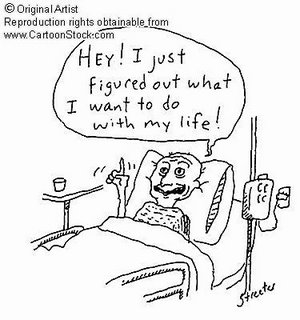
You keep it going man, you keep those books rolling,
You pick up those books your going to read
And not remember and you roll man.
You get that a sociate degree, okay,
Then you get your bachelors, then you get your masters
Then you get your master’s masters,
Then you get your doctron,
You go man, then when everybody says quit
You show them those degree man, when
Everybody says hey, your not working,
Your not making in money,
You say look at my degrees and you look at my life,
Yeah i’m 52, so what, hate all you want,
But i’m smart, i’m so smart, and i’m in school,
And these guys are out here making
Money all these ways, and i’m spended mine to be smart.
You know why?
Because when i die, buddy, you know
What going to keep me warm, that right, those degrees
I’m not suggesting students drop out of school. Just, reconsider HOW and WHERE you get your education and reconsider HOW and WHEN you apply what you’ve learned to the real world.
GRADUATE education is the Detroit of higher learning. Most graduate programs in American universities produce a product for which there is no market (candidates for teaching positions that do not exist) and develop skills for which there is diminishing demand (research in subfields within subfields and publication in journals read by no one other than a few like-minded colleagues), all at a rapidly rising cost (sometimes well over $100,000 in student loans).
Widespread hiring freezes and layoffs have brought these problems into sharp relief now. But our graduate system has been in crisis for decades, and the seeds of this crisis go as far back as the formation of modern universities. Kant, in his 1798 work “The Conflict of the Faculties,” wrote that universities should “handle the entire content of learning by mass production, so to speak, by a division of labor, so that for every branch of the sciences there would be a public teacher or professor appointed as its trustee.”
Unfortunately this mass-production university model has led to separation where there ought to be collaboration and to ever-increasing specialization. In my own religion department, for example, we have 10 faculty members, working in eight subfields, with little overlap. And as departments fragment, research and publication become more and more about less and less. Each academic becomes the trustee not of a branch of the sciences, but of limited knowledge that all too often is irrelevant for genuinely important problems. A colleague recently boasted to me that his best student was doing his dissertation on how the medieval theologian Duns Scotus used citations.
“How can I use Twitter to help my organization? I know I need to be on there, but how do I use it? What do I do?”
Answer (3-parts):
Define your organization’s objective
Establish your voice
Build an audience
DEFINE YOUR ORGANIZATION’S OBJECTIVE:
Before you do anything, you first need to define what it is exactly you are trying to accomplish. Are you selling something? A product or service? Are you recruiting or building a team? Are you entertaining for the sake of amusement? Are you informing and educating on a specific topic? Is it a mix or variation of the previously mentioned?
Once you figure out what your ultimate goal is, you can than establish a voice within twitter (or any social networking or media property for that matter) in order to communicate your goals.
ESTABLISH YOUR VOICE:
Now that you have figured out what you want to convey, you need to figure out how you will say it. People use twitter in many different ways, but 3 key examples are:
1. The “What I’m Doing” Method (Real and Random Examples):
Tonight…I am going to hit the treadmill. YIKES.
Taking a fun, random drive on a warm spring evening.
Just had the world famous Bongo Burger Aka Persian Burger. Ohhh yeaaah!
Eating with @—– at pf changs
At meeting, Fed to weigh options to revive economy (AP) http://cli.gs/PVX3HG #Finance
Unless I personally know who you are, I’m probably going to unfollow you if you tell the world “Tonight…I am going to hit the treadmill. YIKES.” I mean, I really could care less if you are going to work off that cheeseburger you just ate for dinner. However, if you for example are someone big in the finance community and tell me “At meeting, Fed to weigh options to revive economy (AP) http://cli.gs/PVX3HG #Finance”, than I probably do care a bit about what you are doing.
Point is, when being personal and communicating in the first person, make sure what you are saying coincides with your goal as an organization.
2. The “Check This Out” Method (Real and Random Examples):
BreakingNewsAuthorities investigate eleven possible swine flu cases in Colombia and Minister Palacio says the government is on high alert – local media.
Look at the Twitter name. Look at the update. Very purposeful, very informative, and most importantly, the message ties back to the goal of that organization.
3. The “Conversation” Method (Real and Random Examples):
If I’m going to consider your organization legitimate and beneficial, I’d like to see that you are involved with some other people or organizations that are influential in your space. Demonstrate that you are engaged in your own community or niche market. This method, in conjunction with other twittering tactics, is how you are going to build an audience.
BUILD AN AUDIENCE
Now that you’ve identified what you want to say and how you are going to say it, you need to get together a group of people that will listen to you and hopefully pass along whatever it is you may be saying. You need followers.
If you are starting from ground zero and no followers on twitter:
Type in some keywords that coincide with your organization’s objectives.
Follow the people that are speaking your language and talking about the things you will be talking about. Reach out to them and tell them about your organization.
If you already happen to be on Facebook and want to leverage your existing FB network:
Now everyone in your Facebook network will get your Twitter updates.
At the end of the day the best way to learn anything is simply by doing, so if you are looking to create value from Twitter, just head over to to www.twitter.com, create an account, and dive right in.
About a month or so ago I had a conversation with a VP from Goldman Sachs. We talked about work hours versus compensation in the investment banking world. We also talked about how he was seriously considering leaving the banking world to pursue an entrepreneurial endeavor. The conversation could pretty much be summed up by this graph:
Until recently, many undergrad and graduate students had one career and one purpose in mind: Work for an investment bank – make a ton of money (most of which came from big bonuses).
Today, those huge bonuses are gone yet some people are sticking around these jobs thinking that one day the tide will turn and the bonuses will be back. Part of me believes this is true, that history repeats itself, and one day big paydays will be back (it’s only a matter of time before someone else exploits a flaw in the open markets).
But the other part of me thinks that this will not happen for a very, very long time.
I recently asked my cousin David Wise, who works as a compensation consultant, what his thoughts were on the big bonus payouts. In short, he made a few really good points:
Investment banks are dead. They are now Bank Holding Companies.
These banks’ Return on Equity (ROE) have dropped anywhere from 20%-30% to 10%-15%. Less money for shareholders. Less money for employees.
The current compensation and incentive structures are broken and need to be fixed.
It’s going to be a very interesting 2009, 2010, 2011….
David’s take on compensation below in a recent CBS news interview:
Things are getting tough, especially in the marketing world.
Marketers have to go way beyond conventional wisdom to drive results for their clients or personal business.
One, definitely not so new style, is what I like to think of as “F-U” Style Marketing. A style where one marketer or company completely bashes another.
I recently turned on a new NYC FM radio station 92.3 NOW FM, and about every 10 minutes I hear them bashing their competing station Z-100:
“If you listen to Z-100, you hate the Easter bunny”
“Commercial free because we don’t have to pay for Elvis Duran’s (the radio MC) hair gel”
There were some other somewhat cheesy bash-lines they had and can’t remember, but you get the point.
Are things so tough that people have to resort to dirty, guerrilla style marketing tactics? Is this just a good tactic to use anyway? I mean, we see it all the time in political campaigns, blogs, articles, reviews, books, music, and television.
I recently saw this video and couldn’t help but think that it was fake and done by a competing pizza company:…talk about “dirty” tactics…
If you’ve recently had one of those light bulb, Velcro, post-it note, window in envelope idea moments, now is the time to make it and sell it.
Here’s how:
MADE IN CHINA – Go create an account at alibaba.com and find a Chinese manufacturer that can make your “whatever it is” idea for cheap.
INFOMERCIALS – Take your product to TV using infomercials.
With the economy still somewhat in free fall, advertisers are cutting back on marketing budgets especially in mediums like print and television. Networks are having hard times filling premium commercial slots with premium commercials, so instead, they turn to infomercials which are mostly direct response advertisements.
McAlister and other direct marketers hope to prosper through the downturn. With top-tier marketing firms slashing their ad budgets, competition for airtime has steadily declined, making room for a new class of advertisers. Infomercials were once relegated to the wee hours of the morning, when slots come cheap. Now they’re turning up in prime time, even squeaking onto the Super Bowl telecast: Cash4Gold, a direct advertiser that melts down jewelry, made headlines in January by snapping up an unsold 30-second slot.
Chances are good that a person calling one of those cheesy infomercials, are most likely going to buy the product. Why else would they pick up the phone in the first place?

![Reblog this post [with Zemanta]](https://img.zemanta.com/reblog_b.png?x-id=71da18b7-9859-4278-b759-64b1e60aaeb4)
![Reblog this post [with Zemanta]](https://img.zemanta.com/reblog_b.png?x-id=516b3239-3bd2-451b-95f2-ebc0e81e3c1c)
![Reblog this post [with Zemanta]](https://img.zemanta.com/reblog_b.png?x-id=0ebee504-fe3c-441e-af11-89e3e230fe68)


![Reblog this post [with Zemanta]](https://img.zemanta.com/reblog_b.png?x-id=d1b48260-98a0-483a-ba77-8117e3afb656)
 Pretty soon those backpacks carrying 100 lbs worth of textbooks will be replaced by one, 10.2 oz
 ![Reblog this post [with Zemanta]](https://img.zemanta.com/reblog_e.png?x-id=ff59907e-6554-401c-bc8f-424ea2d79094)

![Reblog this post [with Zemanta]](https://img.zemanta.com/reblog_e.png?x-id=06799282-9876-43d1-9340-631983f8b4aa)

![Reblog this post [with Zemanta]](https://img.zemanta.com/reblog_e.png?x-id=90f48a3f-e11f-4ceb-936e-338768d4a663)
![Reblog this post [with Zemanta]](https://img.zemanta.com/reblog_e.png?x-id=675de535-501e-4634-83cf-9a76ffd2c64f)

![Reblog this post [with Zemanta]](https://img.zemanta.com/reblog_e.png?x-id=1934b7a9-51d9-4d50-8e0f-0552717592ad)

![Reblog this post [with Zemanta]](https://img.zemanta.com/reblog_e.png?x-id=6cd75dbb-127b-482d-9b01-e1aa7f6b141c)