Entrepreneurship

Meet Thensome.com

Some of the best ideas come from simple questions.
Like: What if you could add THC to any drink you already love—without changing the taste, smell, or vibe?

That’s what we’ve built with Thensome.com. A flavorless, tasteless THC beverage enhancer you can add to cocktails, mocktails, coffee, beer, or water. Whatever you’re drinking, now you can have your drink… and Thensome.

Why Now?

The world is shifting. People are drinking less and looking for better alternatives.

  • Alcohol consumption is at its lowest point in nearly 90 years (Gallup).
  • Daily cannabis use just passed daily alcohol use (AP News).
  • Gen Z overwhelmingly prefers cannabis to alcohol (CBS News).

The timing is right. Culture is ready.

The Team

As I’ve said a million times, the journey is the prize. And the only thing better than building something new is building it with your friends.

  • Steve Weisman knows the cannabis world inside and out, having started and selling his own cannabis company. It also helps that we studied electrical and computer engineering together, started two other companies together, and have been looking to build another project together for quite some time.
  • Peter Alden brings a deep background in sales and tech, and is what we’ll most definitely call a “product-centric” CEO here.
  • Emily Miller spent the past few years building one of the most forward-looking consumer brands, of which I was an investor, and she understands trends and the consumer mindset.

Different skills, same energy, shared vision.

So here we go.
Thensome.com is live.
The product is available for purchase.
Have your drink, and Thensome.

There is a lot more to come, but please let us know what you think and follow us.

And because I had to play around with some new AI tools..

Meet Thensome.com Read More »

Copying Isn’t Cheating (in some cases)— It’s Smart Strategy

“I wanted to win the Olympic gold medal. She did it. I figured, if I copied everything she did, I would win the Olympic gold medal too.”

I’m paraphrasing here, but that’s what Nastia Liukin, Olympic gold medalist, told me the first time we met. She was referring to another gold medalist gymnast who practiced at her gym. We were just starting to work together on TULA, where she became our first brand ambassador. Her mindset stuck with me, especially since it’s an approach I’d used too.

Most people think copying is wrong — even taboo. They confuse it with theft.

Yes, stealing someone’s work or IP is theft. But borrowing a framework that works? That’s not theft — that’s mentorship in disguise. It’s how we learn from people who’ve already figured it out.

When we launched TULA, we “stole” two core playbooks:

  1. Go narrow and deep with one motivated retail partner — a strategy my partner Ken used while building Bobbi Brown.
  2. Lean heavily into influencer marketing — something I saw work firsthand while building Spinback.

At Troops, we borrowed another winning formula: build on top of a widely adopted platform for accelerated distribution. In our case, it was Slack. At Buddy Media and Spinback, it was Facebook. One was a social network for the enterprise, the other was for consumers. Same strategy, different platform.

Even when hiring, I use frameworks and interview questions inspired by leaders like Zuckerberg and Musk — not to imitate, but to learn from their pattern recognition and what has clearly worked for them. Specific interview questions and frameworks I “stole”:

  • “What’s something you’ve done that is exceptional?” – Elon
  • “Would I work for this person?” – Mark

Now let’s be clear: there’s a line. I’ve seen companies cross it — pixel-for-pixel clones, one-to-one knockoffs. That’s theft. That’s lazy. That’s short-term. It’s also scummy.

But copying a strategy with intention and ethics? That’s just smart. The truth is, some of the most effective outcomes in business (and life) come from studying what works and adapting it well.

Copying isn’t the enemy. Done right, it’s a shortcut to excellence.

Nastia Liukin, Olympic gold medalist and TULA’s first brand partner

Copying Isn’t Cheating (in some cases)— It’s Smart Strategy Read More »

Walking Paradoxes: Why Our Contradictions Might Be Our Superpower

Humans are walking paradoxes—complex, layered, and often full of surprises. A scientist might spend her days decoding molecular structures, then go home and lose herself in oil paints. A finance executive could secretly be a poet, writing verses more moving than market trends. A waitress might be jotting down screenplay notes between tables, crafting stories that rival what’s showing on Netflix.

We often assume expertise must match a title, but some of the most profound insights come from the least expected places. And sometimes, it’s the combination of seemingly unrelated interests that creates true innovation. Steve Jobs is a perfect example—his fascination with calligraphy and philosophy, when fused with his love for technology, helped shape the aesthetic of modern computing. The Mac’s typeface and interface weren’t just functional; they were beautiful. That happened because of his paradoxes, not in spite of them.

On the flip side, titles alone don’t guarantee mastery. A parent volunteering part-time in a classroom might connect with students more deeply than a certified teacher. A high schooler passionate about geopolitics could out-analyze a foreign policy “expert.” And in the world of finance, we saw a retail investor like Roaring Kitty outsmart Wall Street veterans during the GameStop saga—doing his own research while hedge funds completely missed the mark.

When I was building TULA and Troops, I saw this firsthand. In the beauty industry, I was “the tech guy.” In tech, I was “the beauty guy.” But the randomness? That was the advantage. In beauty, we used SaaS playbooks. In SaaS, we applied consumer-brand marketing tactics. That cross-pollination made both companies better.

The truth is, skill, passion, and insight rarely wear name tags. They live in the curious, unpredictable spaces between our identities. That’s where magic often happens—where paradox becomes power.

Walking Paradoxes: Why Our Contradictions Might Be Our Superpower Read More »

Lotame Acquired By Publicis Groupe

Publicis Groupe has agreed to acquire ad tech firm Lotame, expanding the holding company’s global identity and data-management capabilities.” – Digiday

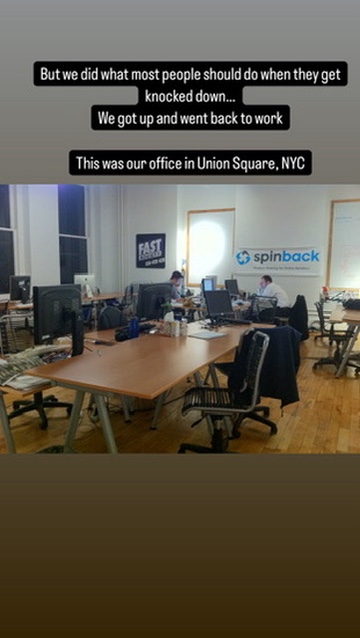
About eighteen years ago, I met Andy Monfried, who offered me an internship at his online advertising startup, Lotame. It was an opportunity I couldn’t pass up.

After graduating college, I joined full-time. But there was a catch—I had to reverse commute from NYC to Columbia, Maryland, where our headquarters was based. My days started early, really early. I’d wake up around 4 AM, jump in the car, and drive two to three hours to the office. During the week, I stayed in a corporate apartment with Andy, fully immersed in the startup grind. Then, every Friday, I’d drive back to the city, catch up with friends, and do it all over again the next week.

I kept up this routine until we eventually opened a New York office.

Looking back, those long drives to Maryland weren’t just part of the job—they were the foundation of an incredible journey. What I remember most isn’t the commute itself but the people I worked with. I was surrounded by some of the smartest minds in technology, and those early days shaped the way I think, work, and lead today.

Sometimes, the road to success is quite literally a long drive, wrapped up in a lot of patience —but if you’re surrounded by the right people, it’s always worth it.

Congrats Andy, Jeremy, and the rest of the Lotame team. Incredibly well-deserved!

Lotame Acquired By Publicis Groupe Read More »

A Post-Exit Podcast

There’s a ton of myths out there about folks who’ve started and then sold their companies, especially when it comes to what they end up doing next.

In the same vein, a lot of entrepreneurs who’ve poured their heart and soul into one big project for years suddenly find themselves lost or confused once it’s all over, wondering, “What now?”

We spoke about this and more on the “Exit Paradox” podcast.

Video here and below.

A Post-Exit Podcast Read More »

The Treadmill of Life

The first CEO I worked for (Andy Monfried) survived a suicide bombing in Tel Aviv. When he got home he quit his company doing door-to-door paper sales to join two brothers on their startup. That company was acquired and years later Andy launched his own.

The second CEO I worked for (Michael Lazerow) was 19 years old when his heart valve stopped working. His blood pressure dropped to zero and had 3 hours to live. He did indeed survive and later that year started his first company. It would be the first of many. Most of those companies were acquired.

The Uber driver I had this morning told me a story… “I used to work as a sales rep hitting quota. I was always working for the next president’s club, over and over again, stuck on the hamster wheel.” He then told me about how he survived 9/11 and how all he wanted to do was get home to see his one-year-old son who was beginning to walk. He made it home that day. And the day after that? He quit his job and became a pasture.

Many of us coast through life stuck on a treadmill we never realized we got on in the first place. The conveyor belt of life loops around again and again, year after year, and we don’t jump off in search of better use and meaning with our time.

We hear about people who completely change their lives after being faced with a life-or-death situation. We hear and read about how they’ve found new meaning and a new calling. Or as Andy put it, how they are “playing on house money.” Yet most of us still carry on like zombies…

Most of us should be so thankful that we haven’t had to live through such a dire moment, but most of also us need a wake-up call to make the most out of this game called life.

If we look around we can find moments and stories like these that can act as a mirror and help us ask the hard question…

“What am I doing with my life?”

My Uber ride this morning was a good reminder of that. We’re all playing on house money and once you internalize this idea it’s a little bit easier to jump off the treadmill.

The Treadmill of Life Read More »

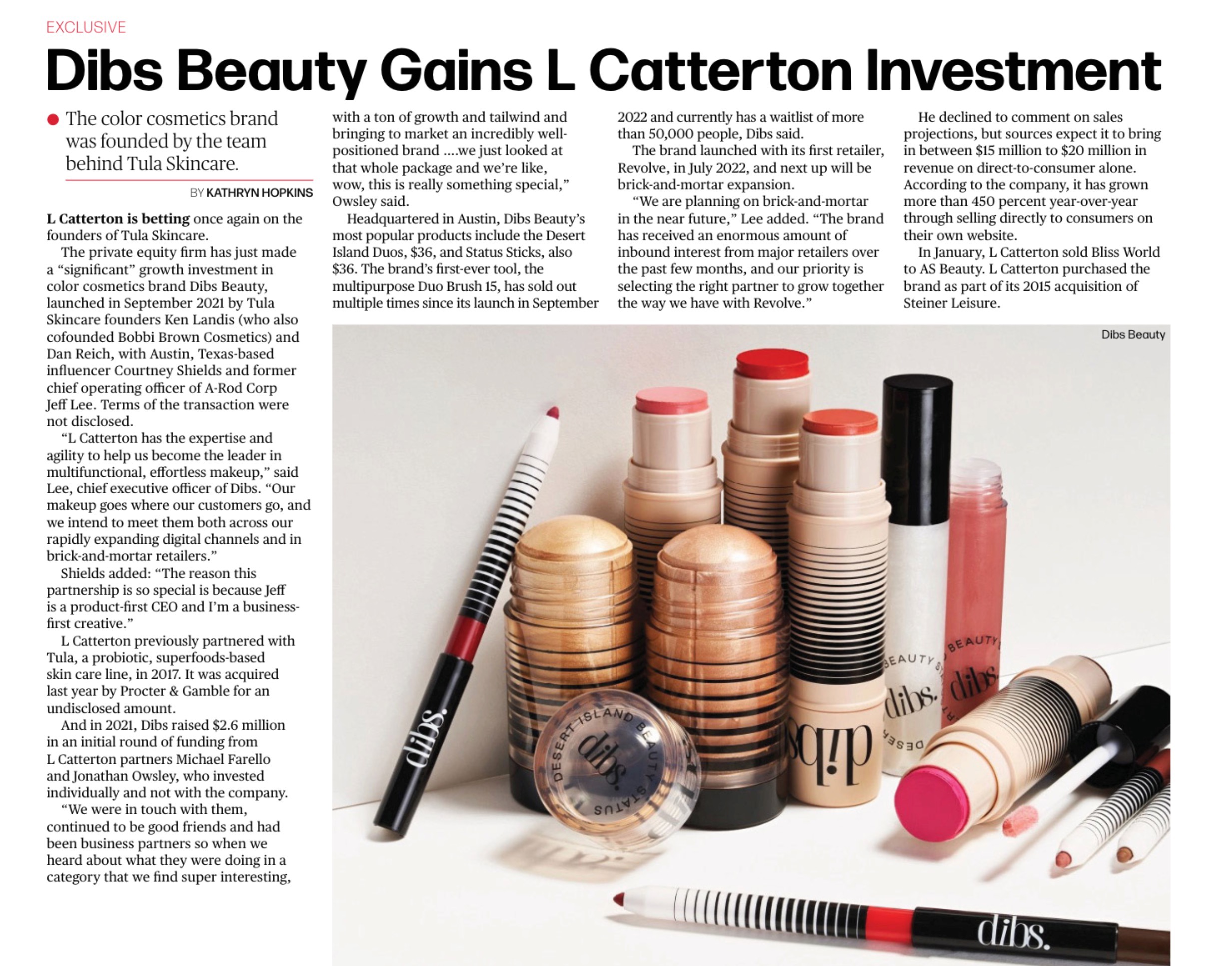
Dibs Beauty Gains LCatterton Investment

Today, the Dibs Beauty team is announcing our partnership with LCatterton.

The best part of being an entrepreneur is getting to work with amazing people, and I’m excited to be able to once again team up with the folks at LCatterton, and of course, Ken Landis. And just as good, getting to work with Courtney Shields and Jeff Lee from day one on this venture. Exciting times ahead!

L Catterton is betting once again on the founders of Tula Skincare. The private equity firm has just made a “significant” growth investment in color cosmetics brand Dibs Beauty, launched in September 2021 by Tula Skincare founders Ken Landis (who also cofounded Bobbi Brown Cosmetics) and Dan Reich, with Austin, Texas-based influencer Courtney Shields and former chief operating officer of A-Rod Corp Jeff Lee. Terms of the transaction were not disclosed.

The full article is below.

Some links to the news:

Dibs Beauty Gains LCatterton Investment Read More »

9 Tips for Mergers & Acquisitions

This is a repost from a LinkedIn post, for easy reference and since the topic keeps coming up.

A lot of entrepreneurs are now hustling to raise more money or sell their companies. Having just lived through two M&A events this year with P&G and Salesforce, wanted to share some brief M&A lessons:

1. Companies don’t buy companies. People at companies buy companies. Know who your buyers and champions are and build relationships with them.

2. 1,000,000 things need to go right for successful M&A. 1 thing needs to go wrong for unsuccessful M&A. Every detail matters.

3. Bankers are helpful, but don’t expect them to be a silver bullet to getting a deal done. You may pay more than feels reasonable, but it’s still a good insurance policy to making sure a deal gets across the finish line.

4. A deal isn’t done until it’s done. The unexpected will almost certainly happen.

5. You need competitive tension and urgency. Just like sales, or raising money, without compelling events and some FOMO in the process, it’s easy for things to drag out. See 1.

6. Get organized. All of your files, contracts, documents, vendor lists and pretty much everything you’ve ever done will need to be reviewed. Get ahead of it and organize it all so you can move fast and efficiently. Also, see 2, 3.

7. Understand the buyer’s intentions. What’s strategic to them and why? Your business will be valuable for different reasons to different buyers, therefore, your story will need to be different to different buyers. For example, with TULA, some buyers cared more about our science and R&D while others cared more about our digital capabilities.

8. Delegate everything. Once you get into the M&A track, it becomes a full time job. Make sure you’ve delegated as much as possible to your team so you can focus on getting a deal across the finish line. Also, see 3.

9. Manage your emotions. The highs are high and the lows are low. Be prepared to deal with a roller coaster of emotions.

If you’re going through M&A, thinking about it and/or have some questions, drop em in the comments.

9 Tips for Mergers & Acquisitions Read More »

Making Ideas Tangible

Many of us have ideas for things we’d like to create and invent.

They could be projects or businesses. They could be projects that turn into businesses.

Whatever the case, it’s easy to get stuck in the idea phase but never evolve that idea into reality.

This is true for a lot of people looking to start companies.

I have an idea, but how do I start a company around it?

This is a question I’ve heard a lot over the years.

One trick that’s worked for me is to make that idea tangible by giving it a name.

When you give it a name, it becomes something you can almost touch and feel.

And then it’s easier to talk about and point to.

And the easier it is to talk about and point to, the easier it is for consistency theory to kick in. And this idea of consistency theory, where you must be consistent with what you’ve said or intended to do, will make it more likely that you’ll want to see that idea come to fruition.

So if you have an idea you’ve been thinking about, just try giving it a name to make it more tangible.

Making Ideas Tangible Read More »

Scroll to Top