Author name: DanReich

Badgers Building Startup Businesses in Madison, WI

Bird's-Eye View of Madison, Wisconsin, 1908
Image by Wisconsin Historical Images via Flickr

Madison, Wisconsin could very well be the next hub for startup businesses. When I was in school in Madison, I watched companies like Microsoft and Google open offices on campus in order to tap into the vast pool of engineering talent. The thing is, Madison goes beyond engineering and has very bright, motivated people looking to build the next “big thing.”

My friend Nathan is one of those people and he has had some nice success stories around building businesses. Moreover, he’s got a fresh outlook on what it takes to get things done, and more importantly, why he is doing what he is doing. This one will also be filed under “Student Profiles.”

Student Bio – Nathan Lustig
I’m the cofounder of Entrustet, a website that allows you to decide what you’d like to happen to your digital assets when you pass away. I graduated from the University of Wisconsin in 2009 with a degree in Political Science. While I was a student, I started a tickets and textbooks trading website and grew it to 150,000 users and sold it to my ad network.  I also love sports, traveling, cooking and eating good food.

Dan Reich: Why are you an entrepreneur?
Nathan Lustig: I’m an entrepreneur because I learned at a young age that I really didn’t like the structure of school and being forced to do things that I thought were boring or useless. I was really bored in school growing up and always looked for interesting things to do. When most of my friends got traditional jobs in high school, I started reffing soccer when I was 12, cut lawns and figured out ways to make money. I was always starting things or looking for ways to improve existing products and quickly realized that I would hate living and working in a cubicle.

When I got to college, I bought and sold tickets my freshman year and realized that there was room for a well run website to organize the market. After being in business for a month, I knew there was no way I would be getting a “real” job anytime soon. I love the freedom, the new challenges every day and trying to create something that I know will help people in their day to day lives.

DR: What is entrustet all about?
NL: Entrustet is a free service that allows you to create a list of your digital assets (online accounts and computer files) and then decide if you’d like them transferred to heirs or deleted when you pass away. We came up for the idea after reading Thomas Friedman’s The World is Flat. He talks about a US marine who was killed in Iraq and his family wanted access to his Yahoo! account. Yahoo! said no and after a court battle, a judge ruled that Yahoo! had to turn the contents of the Marine’s email over to his parents.

We thought this was crazy. You shouldn’t have to go to court to gain access to a loved one’s digital assets. We also thought that there may be some assets that you’d rather keep private. The court case showed that your online accounts and computer files are real assets that should be dealt with during the estate planning process. Fast forward to 2010. Domain names, blogs, family photos, email, contacts, twitter and other digital assets dominate our daily lives.

We also work with attorneys to teach them how to add digital assets to wills and trusts. A few months back, my cofoudner Jesse Davis and I were the first people in North America to execute traditional wills with our digital assets included. It’s fairly easy for attorneys to add digital assets to estate plans, but most don’t because they don’t know how to do it. We teach attorneys and then certify that they know what they are doing.

The last piece of Entrustet deals with websites. Websites have no idea when their users pass away and don’t know what they wanted done with their accounts either. This leads to poor customer service, wasted resources and potential legal liability from identity theft, among other things. For example, three Facebook users die every single minute and Facebook has no idea who they are or what they wanted done with their profiles. We help websites by notifying them when their users pass away and what the user wanted done with their account.

Our goal is to help people deal with digital death so that they don’t lose valuable digital assets when they pass away.

DR: Why are you trying to start a business in Madison, WI, and more importantly what’s the deal with your relocation to Chile?
NL: I’ve lived in Madison for the past six years now and love it. It’s got a great University and high quality of life. While I was running my tickets/textbooks website, I’ve gotten to know pretty much everyone in town, so it was natural that we started our next business in Madison. Plus, it’s really cheap. I rent a 3 bedroom with a lake view for $1050 per month, total, for all three of us, utilities included. We rent awesome office space just off the Capitol Square for $250 per month. The money we raise goes MUCH farther here than in NYC or San Francisco.

The Chilean government wants Santiago to be South America’s startup hub, so they are offering foreign startups $40,000 and free office space to move there for up to six months. I applied after reading about the program in Forbes and applied on a lark. We got picked and after talking with our advisers, partners and investors, we decided to make the move. We think the Startup Chile program offers us some awesome networking opportunities, plus I’ve always wanted to live in a Spanish speaking country to get fluent in Spanish.

My partner Jesse and I do most of our work online or on the phone, so we don’t envision all that much changing. Chile is EST+1, so the time difference is minimal and we’re a direct flight away from NYC and 1 stop from San Francisco.

DR: What are you thoughts on Madison, WI as a technology or startup hub?
NL: Madison is already a technology hub, but for the past decade or so, it’s been in biotech. Over the past six years, it’s becoming an emerging IT startup hub as well. Madison was just named the 7th most innovative city in the US and I think it’s what Boulder was 6ish years ago and Austin 8ish years ago. In May 09, I started an entrepreneur meetup group called Capital Entrepreneurs. We had 10 web startups at our first meeting and now we have 65 in the group. Madison is starting to get on the map, with articles in TechCrunch and Read Write Web and Madison companies like JellyFish, Networked Insights, Alice, Brazen Careerist, PerBlue, Asthmapolis and other getting national play. Here’s some other Madison startup resources:

1. Capital Entrepreneurs – Founders meetup group
2. Merlin Mentors – Pairs up successful entrepreneurs with people who want to start businesses
3. Burrill Business Plan Competition – UW student business plan competition
4. Entrepreneur dorm – Dorm floor at UW for students who want to start businesses
5. High Tech Happy Hour – Meetup for high tech workers
6. Forward Technology Conference – Mini SXSW held in Madison

DR: Are there any past projects you worked on that were successful? Failures?
NL:
Successes

Failures

  • Facebook Foodcourt – Tried to create an online ordering website inside Facebook in 2007
  • Madison Independent Realty – Tried to create a website that would allow college students at UW to find houses not owned by the big property management companies. Failed because we couldn’t get the property managers to pay us anything to list in 2005.
  • Segway Sharing – Tried to do a shared segway system on UW campus in 2008, realized it would cost too much and people feel self conscious riding them.
  • Mobile Tickets – I wanted to build a mobile app that would show people buying and selling tickets in real time, in your area. The tech wasn’t there in 2006/7, but it is now. Someone please build this. It would be awesome.

I’m sure there’s more, but those are the ones that are coming to mind right now.

DR: Where do you see yourself in 5 years?
NL: I really have no idea. I’m sure I’ll be doing something entrepreneur related, but 5 years seems really far off. As you can see by the Chile move, I hardly know where I’ll be in 6 months, much less five years. I hope I’m doing something fun, interesting and useful. At some point I really want to work on something education related, but I’m not sure when.

Nathan blogs at http://www.nathanlustig.com/

Enhanced by Zemanta

Badgers Building Startup Businesses in Madison, WI Read More »

Building Things For Your Pockets – A Unique Perspective On The Future of Mobile

There is no doubt in my mind that our dependency on mobile phones will continue to increase. I’m not going to try and justify this statement because this is quite simply a fact, and with that fact comes a tremendous amount of opportunity. A friend of mine has been digging into this space and I thought his current approach, tactics and projects were worth sharing.

David Alson shares his insights below in another post I’ll file under “Student Profiles.”

Student Bio – David Alson
David Alson was born and raised in the New York City area and is currently a senior at Miami University in Oxford, Ohio. He is studying Electrical Engineering and Computer Science, with hopes to pursue a career in the technology industry after graduation in the spring of 2011.

Dan Reich: I understand you’ve developed some iPhone apps.  Could you talk a little bit about those, and your experiences in creating them?
David Alson: During the summer of 2009, I bought an introductory book on iPhone programming and started teaching myself how to build apps. I built some basic apps to get used to the environment and Objective-C, learn about the Cocoa Touch framework and experiment with features of the iPhone I have never programmed for before, such as the accelerometer, camera and touch screen.

The first app that I released to the App store was a generic countdown to the 2010 New Year. I wanted to put something in the store so I could see first hand what the process was like and how the App store made and recorded sale transactions.

The second and third app that I put in the store was a game with a free version with ads and a 99-cent version called BallFall, which I decided to make for two reasons. The first reason was because I wanted to see how much I had taught myself about iPhone programming. I figured creating a game would be the most fun in the end and also be something that I would be willing to put in the store after it was done. The second reason was because the games category is the most successful category in the App store and I wanted to see how well ads do in free apps.

DR: What projects are you working on now?
DA: In addition to my electrical engineering course work, several projects I am currently working on include the Miami University App, Track ‘M, which will be integrated into the Miami App, and my first mobile game, BallFall.

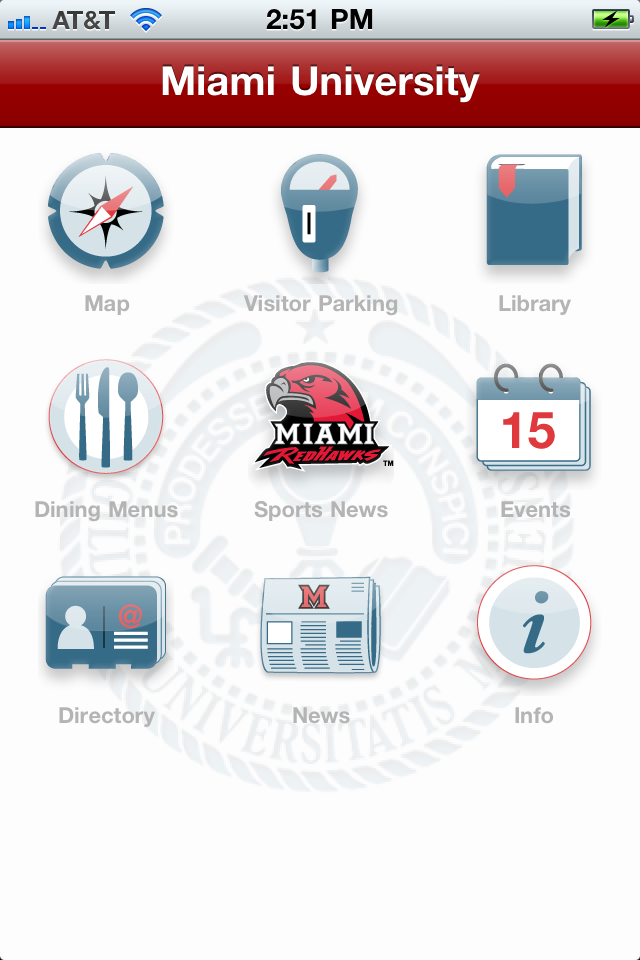
The Miami University App was designed for current students, perspective students and parents, all Miami University faculty members, and especially new freshmen in need of a portable assistant to help with the transition into their new collegiate lifestyle. Some features of this app include a map of campus with building information, visitor parking information, dining menus to see what is being served in the dining halls across campus, sports and events news and a directory to search for contact information for all students, faculty and staff at the university.

Track ‘M is projected to be a live GPS bus tracking system for the Miami University transit system. This application is currently being designed to be incorporated into the Miami University App so those interested in accessing and utilizing the MU transit system will be able to access and view live locations of each bus and receive approximate bus arrival times at the desired destination.

Lastly, BallFall, which as previously mentioned, was designed as a personal examination of various aspects of the mobile market and a way to examine my own abilities with Objective-C. I am currently working on introducing an online leaderboard to feature high scores, which I decided to incorporate after taking a class on web services and SOA. I anticipate its release within the next couple weeks.

Those projects can be seen below.

DR: Where do you see the biggest opportunities in the mobile space?
DA: I believe there are two areas that have high potential for opportunity and growth within the mobile space—the medical industry and the education system. With a huge percentage of the population carrying mobile devices now, the medical industry has an opportunity to change how practitioners monitor and deliver vital information to their patients. After hearing about the implementation of mobile devices in the classroom resulting in higher engagement and participation levels, I feel the education system is currently presented with an opportunity to redesign traditional methods into a more modern system that is interesting to both students and faculty.

DR: What do you think about the current education system?
DA: I believe there is a technologic disconnect between students and educators. Many educators are resistant to having mobile devices in the classroom, while students are inevitably going to use them anyway, be it for texting or accessing the internet. Current students are growing up with mobile devices and the education system needs to expedite its transition into the mobile world of today.

DR: Do you teach things to yourself in order to get things done? If so, how?
DA: Absolutely. When there is a concept I do not understand, the first place I look for answers is the Internet. I feel it is the most efficient tool for finding answers because it provides a variety of perspectives on the subject.

David can be reached at davidalson@gmail.com

Enhanced by Zemanta

Building Things For Your Pockets – A Unique Perspective On The Future of Mobile Read More »

Display Advertising – State of the Union

The Planet Data Center
Image by The Planet via Flickr

Just some high level thoughts on where things are at and where things are going in digital display advertising…

We may look back and call 2010 the year of the “DSP.” It was the year when agencies recognized they could leverage ad network technology and fundamentally change the way their businesses operated. In an instant, buyers had scalable, centralized access to auction-priced display inventory. This new shift realigned agency resources, buying habits and media planning workflow because now, display media could be bought and sold instantaneously. A commodity was now being bought, traded, and sold as if it were the stock market. But now, two things are slowly happening which will bring us to the next wave of technology, or technology protocols and processes. Data Management, or now otherwise known as a DMP:

1.       Buyers are hedging their bets with DSPs, but lack a centralized data warehouse.

As the DSPs or Ad Management Platforms continue to grow, in terms of scale and technical features, the buyers are continuing to explore competitive offerings. At the end of the day, if a DSP is going to power an agency trading desk or a buyer’s business, it will become imperative that the buyer maintains options. And as this diversification happens, the buyers will lose the ability to maintain a standardized, centralized, exportable data set. A data set that can be used in any DSP, any traditional network, or any publisher and more importantly, for any medium whether it is advertising in display, text, audio, mobile or video.

2.       Publishers are realizing the need to better segment and monetize their first party data.

Publishers face perhaps the most challenging problems of anyone in this ecosystem, primarily due to the fact that the majority of VC backed businesses in the last few years have been focused on the buy-side. As a result, publishers must consider the effects of working with ad networks, data companies, trading desks, yield optimizers, ad verifiers, privacy companies and must do so with inadequate or legacy technology. Technology that was built for the traditional ad network world. The value for publishers, outside of the content and the inventory they create, is unarguably the audience data. It is for this reason publishers are now focused on securing a comprehensive data strategy. A strategy that provides intelligence and protection to monetize data through direct or indirect media sales, or through direct or indirect data sales, all the while leaving that choice up to the publisher.

We will look back and call 2011 the year of the “DMP” and perhaps the year that a new Online Advertising Operating System was formed. The year when a loosely coupled system of advertising technologies (or few tightly integrated systems) began to work together in an attempt to empower media planners with the same capabilities of that of a sophisticated ad network.  And in the middle, will sit the delivery mechanisms (DSPs) and the intelligence (DMPs) so that young media planners can deliver data driven ad campaigns for their client across all mediums and platforms from right behind their desks.

Enhanced by Zemanta

Display Advertising – State of the Union Read More »

Idea: Game Mechanics for Businesses

ICA 2010 Conference Poster - Leveling Up Stude...
Image by inju via Flickr

In my last post I talked about how I would openly share some of my ideas. This is one of those half-baked ideas and like all of my ideas, it was cobbled together from a number of conversations I’ve had with a number of people.

Over the past year and in very infrequent intervals, I’ve been thinking about how a system could be created that would incent people to do things with non-monetary incentives, while at the same time, surfacing the creativity out of people all within a corporate setting. I’ve been thinking about how cool it would be if you could create a system that fundamentally changed the way corporate america works. A system that could change the internal processes, the reward systems, the compensations and the bonuses of business cultures, that from what I hear, simply suck. And I’m interested to see if this can all be done using game mechanics.

It’s been proven already that people do things when they feel a sense of reward and “sense” doesn’t necessarily mean dollars. Just look at all the people starting projects or donating to projects on Kickstarter. Look at all the people freely answering questions on Quora or StackOverflow. Look at all the people that build, and spend money on, ridiculous virtual items to build virtual farms in Farmville.

A common theme here is the use of non-monetary rewards systems. Game mechanics to influence a certain behavior.

So my thinking is, why can’t this same approach be used to influence certain behaviors in the corporate setting? Freeing the minds from the cubes and adding a healthy dynamic to the work at hand. Extracting the creativity and entrepreneurship out of everyone using some new rewards system. A new type of integrated consulting.

Am I on to something or should I go play Farmville?

Enhanced by Zemanta

Idea: Game Mechanics for Businesses Read More »

Share And Tell All Of Your Ideas

When I was younger I had all sorts of crazy business ideas and product inventions, but no one cared because I was young. It was child’s play. Fortunately, some of that inventiveness child’s play found an outlet with Legos. Yes, Legos.

As I got older, I would still have business ideas, inventions and other out-landish ideas, but the advice I got by many was “don’t tell anyone.” “You don’t want anyone to steal your idea.” This advice sometimes seeped through, but most of the time I never listened.  I could never understand how a great idea could ever achieve greatness without talking about it.  I imagined how hard it would be if you spent all of your time not talking about the idea. That by the time you were ready to pursue the idea, you’d already be mentally and emotionally drained from keeping it locked in your head for a long period of time.

In addition, I figured the more people I told the more feedback I would get, and perhaps I would reach a tipping point where more people would want to help and join the cause. Moreover, I thought that some feedback could actually make the idea better than the initial version, at which point, the idea would be something else completely. Something very different then the first idea and so all those who heard version 1, the outdated version, would have not heard version 2, the updated and improved version.

After watching Steven Johnson‘s video below (especially around min 11:40), my idea to share my ideas now seems like it was and is the right path.

Guess the point is, share and tell. I think I’ll be doing some more idea sharing on this blog in the future.

(And no NDAs)

Enhanced by Zemanta

Share And Tell All Of Your Ideas Read More »

Billions Of Dollars Will Be Made From The Cognitive Surplus

If you want to understand where wealth creation will come from in the coming years then you should read Clay Shirky‘s latest book called Cognitive Surplus: Creativity and Generosity in a Connected Age.

His argument is so simple but so profound and that concept is this:

“A trillion hours a year of participatory value are up for grabs. That will be true year in and year out.”

If you think about how most of us spend our time, you’d recognize that it’s probably spent  consuming media. We spend hours watching TV, checking Facebook statuses, reading articles, watching YouTube videos, but only recently have we begun to collectively contribute and generate our own content. When added together, this aggregate thinking and aggregate contribution, or “cognitive surplus” as Clay puts it, can add up to value that we are just beginning to fathom.

However, that value is only as meaningful as the organizational pieces put in place to harness its true power. And this can all be done without spending significant capital.

“Organizations designed around a culture of generosity can achieve incredible effects without an enormous amount of contractual overhead.”

If you were to closely examine companies like Groupon, Kickstarter, Wikipedia, or FashionStake, you’d quickly find how they each leverage the power of groups, aggregate thinking, or aggregate financing. This is where true value lies. Being able to align the cognitive surplus in an elegant fashion so that it benefits both the community, the individuals, and the organizers.

Like I said, I think there are billions, literally billions, of dollars to be made with this mode of thinking.

Watch Clay’s TED talk here and get a hold of his book.

Enhanced by Zemanta

Billions Of Dollars Will Be Made From The Cognitive Surplus Read More »

Learning From Experience

Intel Booth at 2008 Microsoft TechEd.
Image via Wikipedia

School is mostly bullshit. The only way you learn things is by doing things. Real things. Things that have consequences and things that have rewards. A “C” on some school paper isn’t really a consequence, and an “A” isn’t really a reward.

A consequence is losing money on a sunk venture.

A consequence is damaging a good relationship on a failed project.

A reward is turning an idea into a reality.

A reward is getting recognition for some meaningful contribution to a meaningful endeavor.

When I was in high school I had the privilege of working for a person who threw me into the fire and showed me first hand what consequences and rewards, in the business world, were all about.  That person was Marc Harrison, President of a company called Silicon-East Inc which is a small, very technical and very experienced hands on IT firm.

On day one, Marc had me building computers. Start to finish. From hardware assembly to software installation. Up until that point, my experience with PC’s ranged from basic MS Dos to Sim City guru. And before I knew it, I was building, installing and repairing hundreds of computers and shortly thereafter, I was doing the same with servers, laptops and networks. I was on the phone daily with folks from Intel and Microsoft and attended many, many conferences including Intel Channel Partner Conferences and the Consumer Electronics Show in Las Vegas.

At a relatively young age I learned what consequences and rewards meant.

I learned that a consequence is incorrectly building someone’s computer or network  and seriously damaging their business.

I learned that a consequence is incorrectly invoicing a customer and losing hundreds (if not thousands) of dollars.

I also learned however, that a reward is making someone’s day easier by educating and selling that person on new technologies.

I learned that a reward is having the respect and endorsement to represent a company at events and conferences nationwide, even if only 15 years old, and flying solo.

Most importantly, I learned that the only way to really learn anything is by doing. Experience matters most.

Thanks Marc.

Enhanced by Zemanta

Learning From Experience Read More »

Happiness Comes From Helping Others

Mark Suster wrote a great post yesterday called “Life is 10% How You Make It and 90% How you Take It” and it’s definitely worth a read for anyone doing the entrepreneurial thing.

He talks about how “happiness has to be a state of mind” and how “you need to constantly remind yourself to be happy whatever your life’s circumstances.”

I was thinking about this a lot over the past two days. The idea of “happiness” and what it really takes to be “happy” – a sort of corollary to Mark’s post. And I couldn’t help think about one of my most serious rescue incidents on Ski Patrol.

It was my first year “cut loose” on mount snow’s ski patrol, which meant I was able to go out on codes (which are reports of an injury or incident) and provide emergency medical care to guests. I didn’t have to shadow any of the seasoned ski patrollers. I had passed my certifications, was approved by senior patrollers to respond to codes, and was now ready to handle situations on my own.

It was Saturday. Sunny, blue skies, with a temp of about 35 degrees. I was wearing my new, fresh, red ski patrol jacket with a white cross on the back, had all my medical equipment in a pack strapped around my waist, and was sporting my new Burton snowboard. I decided to take a run down the front side of the mountain on the “Standard” trail (this ski trail runs directly under one of the main ski lifts). About half way down the trail and towards the top of the ski lift, I approached a group of people huddling around what seemed to be a small person laying on the ground. I quickly sped up on my snowboard and as I got closer, I could see that there was a person in a blue jacket performing CPR on a young boy who was about 12 years old. There were about 10 other people huddling around the boy and meanwhile, there were hundreds of people passing above us from the chairlift, with their eyes now peeled on the ski patroller and the boy on the ground.

The person in the blue jacket quickly identified himself as a doctor (ironically enough, many doctors are never fully trained as first responders and never get experience with emergency situations. This doctor was one of them). Witnesses told me the boy tried jumping off of a log unsuccessfully, fell back, and hit his head on the log. He was not wearing a helmet, became unconscious and stopped breathing.

Within seconds of my arrival, the boy began breathing again but was still unconscious. I performed a quick assessment, took his vitals and stabilized his neck. I radioed in (as a code 3 – the most serious of codes) for additional personnel and equipment, specifically needing a backboard, neck collars, oxygen, and suction (in case the boy started to throw up while still unconscious). I requested a helicopter to transport him to a hospital and within minutes, a helicopter was put in the air en route to the mount snow airport.

About 1 minute after I called for extra hands and equipment, 3 more patrollers were on the scene helping me package, stabilize and transport the boy off the hill. We put him in a sled and I quickly snowboarded him down the mountain and into the doctor’s office. As soon as we got him off the mountain, we put him in an ambulance that was already waiting for us, shut the doors, and watched the ambulance take off to meet the helicopter for transport.

The boy’s fate was now out of my control. I had no idea what was going to happen to him and didn’t know if my actions helped or hurt his chances of survival. That night was tough for me and I can’t imagine how tough it must have been for his parents.

The next day, I returned to the mountain to patrol and at about 1:00pm I got a phone call at the summit rescue building.

It was the doctor who treated the boy on his way out with the ambulance. He said that the boy had suffered major head trauma and that his fate could have gone either way, but as a result of my actions and that of my team, the boy was going to be ok.

I realized at that moment that true happiness comes from helping others. The bigger impact you make on someone else’s life, the happier you will be, and the happier they will be.

Win, win.

Picture of me and my daughter, Michaela.

Happiness Comes From Helping Others Read More »

Alyssa Milano, Star Wars and The “Rainbow Swan” Effect

Black Swans, Purple Cows, colorful animals..

The idea that something big and unexpected could happen without notice is a joke. At this point in time, if you don’t expect big and unexpected things to happen without notice, then you aren’t really paying attention in the first place. This is why I don’t understand big banks, agency ratings and their financial models (besides the fact that I don’t really understand big banks, agency ratings and their financial models).

The financial crisis, BP’s oil mega-mis-step, earthquakes, wars…

These are all things that we know will happen, in some way, shape, or form. But now that we live in a highly interconnected world, the likelihood of these events happening are much greater and will be much more frequent.  In fact, during the financial crisis, three kids (now known as Cornwall Capital) took $100k and bet it on these “rare” events. They turned $100k into $15M which they then turned into $120M.

They essentially bet on “black swan” events.

I digress..

In today’s world, mini-black swans will occur almost daily.  We’ll call these “rainbow swans.”

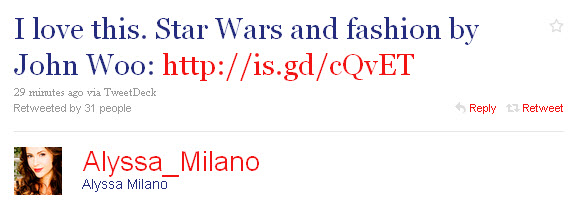
Take for example these two recent “tweets” by Alyssa Milano.

The first was:

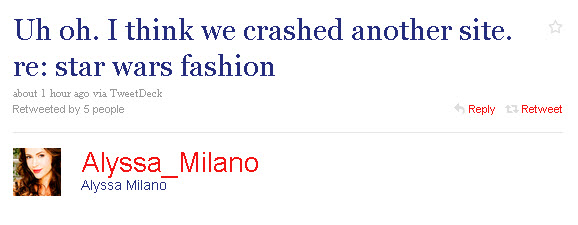
Well, shortly after, she tweeted this:

With nearly 850K followers on twitter, she was able to move a relatively large mass of people, at a specific moment in time, to a relatively unknown website. To that website owner, he has no doubt experienced a mini black swan, now unofficially known as a, “rainbow swan” event.

How was Brennan supposed to know that Alyssa Milano would be in the mood for a hemp-jacket wearing Jar-Jar Banks?

Enhanced by Zemanta

Alyssa Milano, Star Wars and The “Rainbow Swan” Effect Read More »

“Premium Content” is the wrong name – will be called “Niche Content”

content
Image by neonihil via Flickr

This week was internet week. I listened to a lot of media companies talk about “Premium Content” but I’m not sure that this is the right vernacular anymore.

Large media companies establish businesses on the basis that they can create an entire line of “premium content.” Information that is assembled, curated, and distributed with a stamp of approval – that stamp is the company brand name. There is a lot of value to this process, but I don’t buy it, at least not in today’s world.

If I had to choose between reading content written or produced by a “big name media company” or by someone I know and trust, or someone who has a community vouching for that person’s character, credentials and opinions, and someone (or a group of people) that focus on very specific topics and are experts in those topics, I will always choose the latter. (If I could do both, that would be killer – and is a viable business opportunity in my opinion)

I was riding the NYC subway yesterday and saw a quote for a book review. It said something along the lines of:

“An ultimate matchup between….You can’t put this down, it’s one of its kind” – The some city Post

Really? Why should I care that this newspaper, a newspaper from a city I’ve never even been to before, gave the book a rave review? Who cares?

What I really care about is the person that gave the review. I want to know who that person is. I want to know what that person has done and why they are entitled to speak on behalf of some newspaper. If that person’s opinion matters so much, I should be the one to decide.

The future of “Premium Content” will be created by small groups of people and crowds. People with a passion for niche topics, and those people will intently focus on that one topic. They will become businesses unto themselves. The community will provide the seal of approval and the “big name media company” will matter less, unless their businesses change – to businesses of small, relevant, meaningful “niche content.”

Enhanced by Zemanta

“Premium Content” is the wrong name – will be called “Niche Content” Read More »

Scroll to Top